


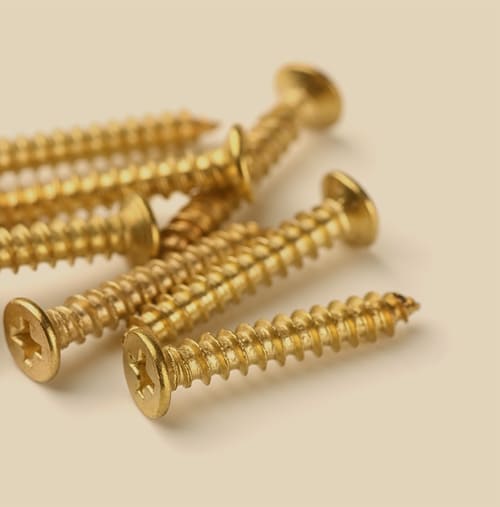
Brass has earned its place as one of the most trusted fastener materials across dozens of industries, and for good reason. Its natural combination of corrosion resistance, electrical conductivity, and machinability makes brass fasteners a practical choice wherever steel would corrode, aluminum would strip, or plastic would fail. At KD Fasteners, we supply brass nuts, bolts, screws, and more in standard and custom configurations — providing engineers, procurement teams, and OEMs with a single, reliable fastener supplier for the parts their applications require.
Why Brass Fasteners?
Brass is a copper-zinc alloy, and its specific composition determines its mechanical properties. The lead content found in some grades, like Alloy 360, dramatically improves machinability, making it one of the most shop-friendly materials in precision fastener manufacturing. That machinability translates directly into tighter tolerances, cleaner threads, and more consistent parts across high-volume orders.
Galling Resistance: Brass fasteners offer a low-friction surface that resists galling — a common failure mode when stainless steel fasteners are overtightened or cycled repeatedly. Brass also conducts electricity reliably without adding significant weight, which explains why it shows up in electrical panels, terminal blocks, grounding assemblies, and electronic enclosures. When a connection needs to remain secure and conductive for years of service, brass bolts and nuts consistently outperform alternatives.
Antimicrobial Properties: Brass's natural antimicrobial properties add another dimension to its appeal. Copper-based alloys are known to inhibit bacterial growth on contact surfaces, which is why brass fasteners appear in food processing equipment, medical device housings, and plumbing assemblies where hygiene standards are strict.
Brass Alloy Options We Supply
Not all brass is the same. As a nuts and bolts manufacturer with decades of experience, we stock fasteners in three primary brass grades, each suited to different performance requirements:
Brass Alloy 270 consists of 65% copper and 35% zinc, giving it a tensile strength of 70,000 psi and a yield strength of 45,000 psi. This grade offers excellent cold-working characteristics and a bright, polished finish, making it a preferred choice for decorative hardware, architectural applications, and precision instrument components.
Brass Alloy 360, the most commonly specified free-machining brass, contains 61.5% copper, 3% lead, and 35.5% zinc. Its tensile strength is 50,000 psi, with a yield of 30,000 psi. The lead addition gives it exceptional machinability, making it the go-to grade for high-volume brass bolt and nut production where speed and precision matter.
Commercial Brass contains 55–65% copper, 35–42% zinc, and 0.05–3.5% lead, with the same tensile and yield properties as Alloy 360. This grade covers a broad spectrum of general-purpose applications and is widely used across industrial manufacturing, marine fittings, and OEM assembly lines.
REQUEST A QUOTE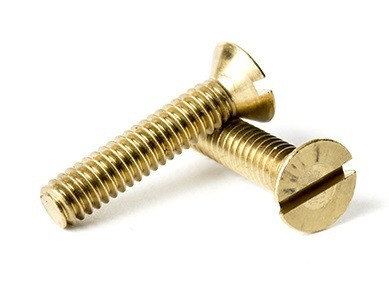
Industries That Rely on Brass Fasteners
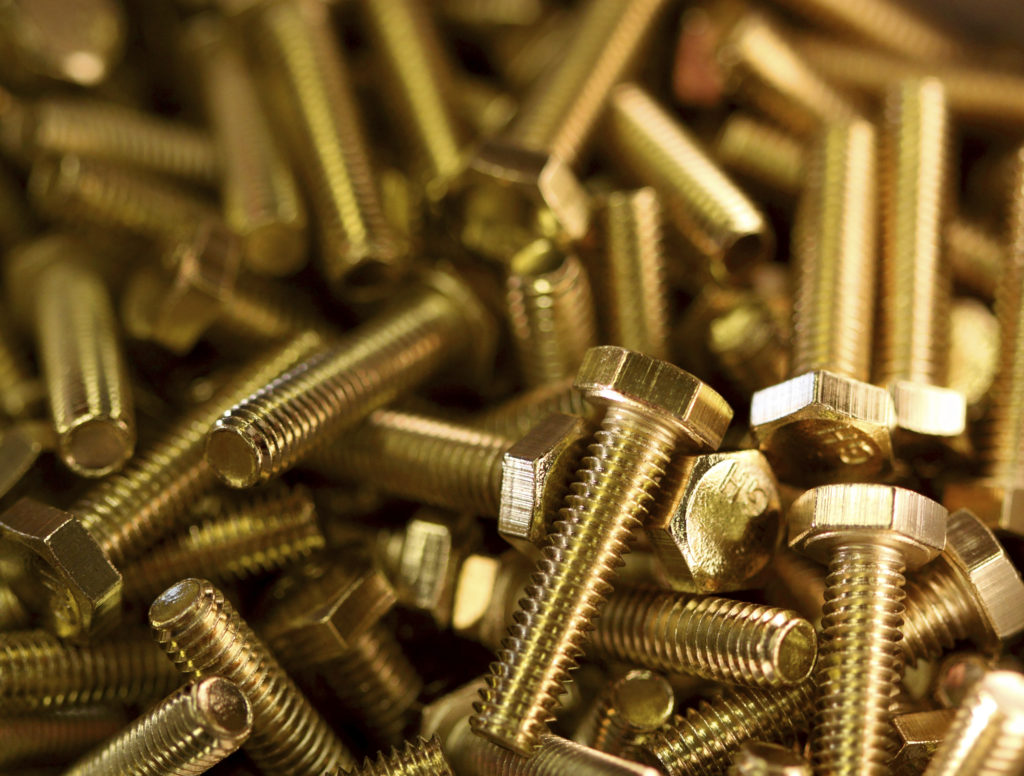
Our brass fastener supply is ideal for customers in fields where material selection directly affects product performance and longevity. Electronics manufacturers specify brass machine screws for their conductivity. Marine fabricators choose brass bolts and nuts for assemblies where galvanic corrosion is a constant concern. Automotive suppliers use brass fittings and fasteners in fuel systems, fluid connectors, and sensor housings. Medical equipment builders rely on brass hardware in nonmagnetic assemblies and hygiene-sensitive contact points.
Oil and gas customers, aerospace component suppliers, and defense contractors also source brass fasteners from us when their specs call for nonsparking hardware — a critical safety requirement in environments with flammable gases or combustible dust.
Standard and Metric Brass Fasteners
As a metric nuts and bolts supplier with deep capabilities in inch and metric sizing, we maintain a brass inventory that covers a wide dimensional range. Our metric brass fasteners meet the sourcing needs of customers building to ISO or DIN specifications, and our standard inch offerings accommodate SAE-threaded applications.
As a full-service fastener supplier, we handle single-material orders and mixed-material projects alike, with no need to coordinate across multiple vendors.
REQUEST A QUOTE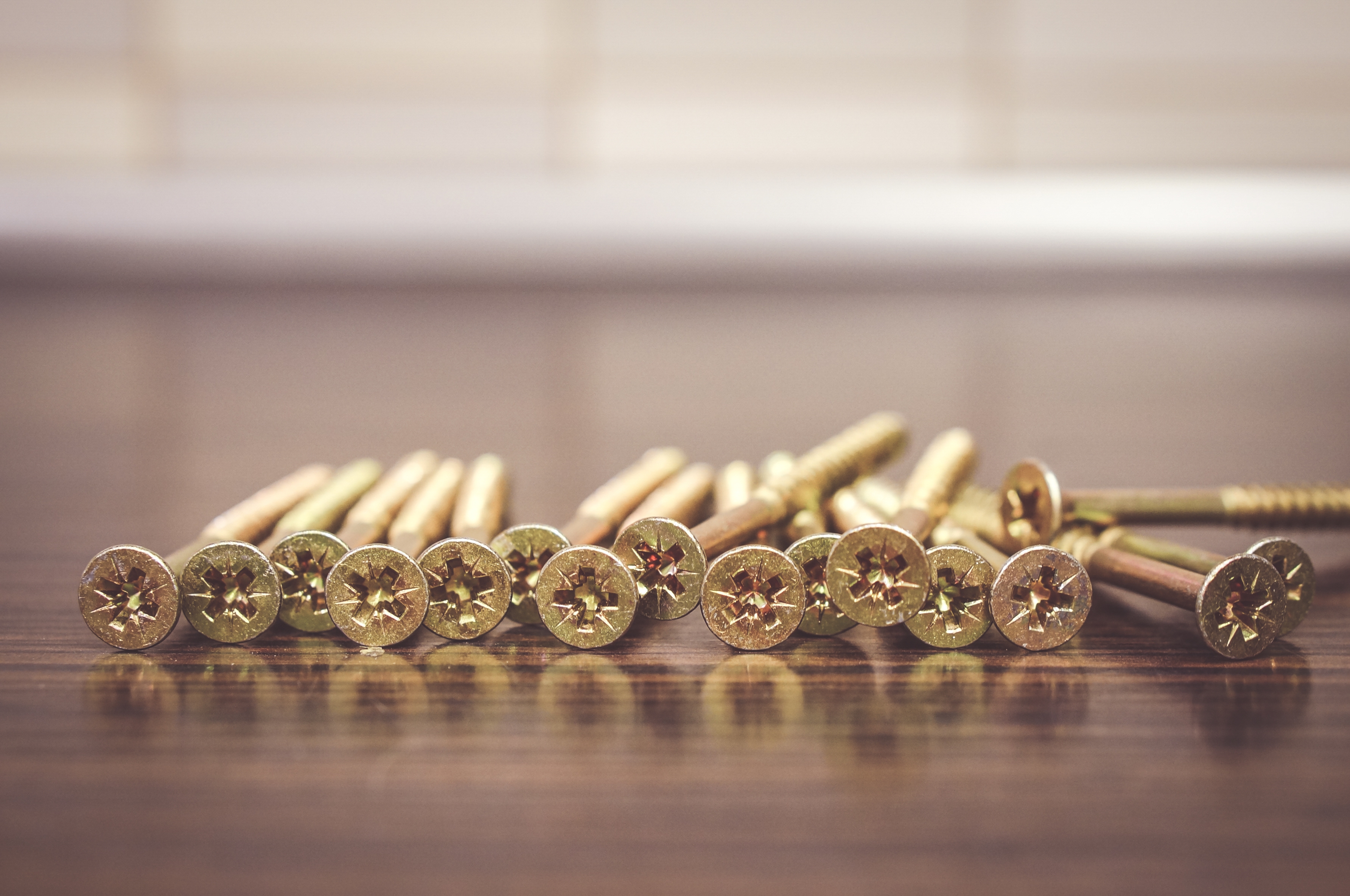
Get Brass Fasteners Manufactured to Your Spec
We work directly with engineers and buyers to source brass fasteners, giving you access to leading brass nuts and bolts manufacturers. Submit your print, RFQ, or part number, and we'll put together a competitive quote fast. Contact KD Fasteners today to get started.
Frequently Asked Questions
Can brass fasteners be used in outdoor or marine environments?
Yes, brass performs well in outdoor and saltwater-adjacent applications, but the specific alloy matters. For fully submerged or prolonged saltwater exposure, specifying bronze as an alternative is worth discussing with our team before placing an order.
What is the difference between brass and bronze fasteners?
Both are copper-based alloys, but their secondary elements differ. Brass combines copper with zinc, while bronze traditionally uses copper and tin (though modern bronze alloys often include silicon or phosphorus). Bronze fasteners generally offer higher corrosion resistance in seawater and greater hardness than most brass grades, making them a stronger choice for marine structural applications. Brass is typically easier to machine and more cost-effective for electrical, plumbing, and general-purpose industrial use.
Do brass bolts and nuts require any special torque considerations during installation?
Yes. Brass is softer than steel and has lower tensile and yield strength, so it requires lower installation torque values to avoid thread stripping or fastener failure. Using a calibrated torque wrench and following brass-specific torque charts is important, especially in high-vibration or thermally cycled assemblies. Galling is less of a concern with brass than with stainless steel, but lubricating threads with an anti-seize compound is still recommended in applications where periodic disassembly is expected.